
The Affordability Crisis Isn't A “Hoax” And There's Hope In Community
Mutual aid, bartering, and building community no matter where you live in these trying times.


In a recent discussion with friends, the question of basic survival came up. People who had always felt safe in the past were now scared about the necessities of life: food, housing, personal needs.
Their fears, unfortunately, are well founded.
Attacking any program that helps the poorest people in the United States—such as Medicaid, Medicare, the Supplemental Nutrition Assistance Program (SNAP, formerly called food stamps), and Temporary Assistance for Needy Families (TANF, formerly called welfare)—while robbing the Social Security trust fund coffers has been standard practice for the Republican Party since President Ronald Reagan’s administration.
And the Trump administration and the congressional GOP have made it clear the only thing they plan to protect is the wealth of millionaires and billionaires. Social safety nets are on the chopping block as they strive to return to a robber baron economy and meet their Project 2025 goals.
A not insignificant portion of the voting population are happily going along with them, thanks to a combination of ignorance, bigotry, and misinformation.
People who keep voting for the GOP claim that undocumented immigrants are getting federal food and financial assistance because Republicans keep regurgitating that lie. In reality, most green card holding documented immigrants have to wait for five years after getting their green card before being eligible to even apply for benefits.
The only exceptions are school lunch programs which feed all children, WIC benefits for pregnant women, emergencies like natural disasters, and benefits for immigrants with federally recognized refugee status—like the White South Africans Trump imported to the United States in May to push a false narrative about a White genocide in Elon Musk’s birthplace.
People who routinely vote for Republicans claim to know someone who knows someone who drives an expensive car, uses an iPhone, and eats steak and lobster while on welfare and food stamps. They spout rhetoric about “welfare queens” working the system.
And the GOP always accompanies such misinformation with photos or videos of Black and brown people.
The reality is that the reddest states have the highest levels of poverty, the highest levels of federal benefit recipients, and the lowest levels of access to education and healthcare. More long-term benefit recipients are White rather than Black or brown.
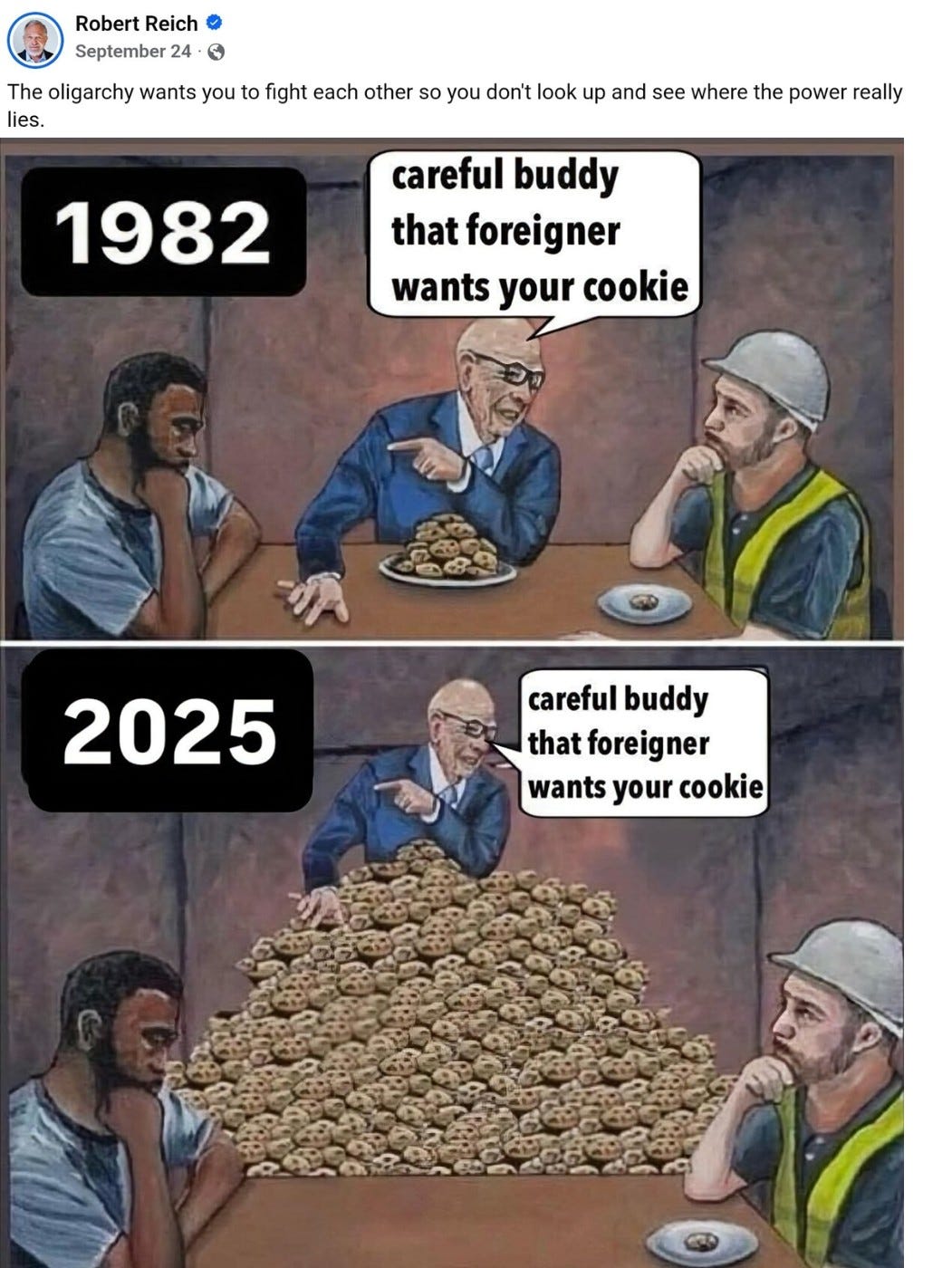
Along with gerrymandering and fear mongering, Republicans have relied on convincing people that “illegal” immigrants and racial minorities are stealing their tax dollars and living the good life to blind them to the tax breaks they give to billionaires and the subsidies paid to corporations that are reporting record profits.
According to the USDA’s Economic Research Service, in fiscal year (FY) 2024-2025, the average SNAP benefit is $177-$188 per person or $332 per household monthly—about $6 daily per person for food. The national average TANF payout is $650 per household per month.
Both programs also have among the lowest levels of fraud, waste, and abuse by recipients among all federal programs. The USDA reports over 98% of those receiving SNAP are eligible at the time of disbursement combined with high payment accuracy (over 95%).
By contrast, Defense Department fraud by recipients was so egregious, both the wholly independent Defense Contract Audit Agency and the Defense Finance and Accounting Service were created in 1965 and 1991 respectively to oversee billing and payment of DOD funds.
Despite having two separate agencies reviewing their finances, DOD reported finding nearly $11 billion in “confirmed fraud” from FY 2017-2024 with the acknowledgment that undetected fraud, waste, and abuse still exists at an unknown scale.
In addition, any review of the data shows that the social safety nets that barely keep people fed and housed aren’t a huge part of where tax dollars go each year. In FY 2024, SNAP cost around $100 billion (1.6% of the federal budget) translating to a cost of about $36 per individual taxpayer.
By contrast, DOD cost taxpayers approximately $874 billion to $884 billion in FY 2024, which included the bill for a poorly attended military parade ordered by Trump. That translates to a cost of approximately $2,600 to $2,700 per taxpayer.
Additionally, around $180 billion is paid annually in direct subsidies, plus significant tax breaks totaling hundreds of billions more, to private corporations.
But too many voters are only looking for two things: a villain they feel superior to and a way to play the victim.
Welcome to the MAGAsphere.
As long as Republicans are in power, facts and numbers won't matter. Social Security, Medicaid, Medicare, veterans benefits, SNAP, and TANF will always be at risk.
So while some folks’ need to be better than someone else outweighs their survival instincts and common sense in the voting booth, the rest of us still have to live with the consequences of their votes.
Going Old School
I grew up poor to lower middle class, but our survival was influenced by a culture that some anthropologists describe as the most successful socialist societies in history.
From each according to their ability, to each according to their need was a core principle for both the Oglala Lakȟóta of the Očhéthi Šakówiŋ and the Kanien’kéha:ka of the Haudenosaunee.
Communal parenting was standard and still is practiced in many existing Indigenous North American communities. Grandparents, Parents, Aunties, and Uncles are abundant on the Rez because the terms aren’t defined in the same way as Eurocentric society.
My Mother’s Sisters are my other Mothers. My Father’s Brother is also my Father. Their children are my siblings, not my cousins, and I am Auntie to their children and the grandchild of my Parents’ other Mothers and Fathers.
Even if the biological parents of a child are unable to care for them, there are plenty of adults to step in.
Gardens and foraging spaces were also communal. Many Indigenous tribes have incorporated community gardens, foraging classes, fish hatcheries, and bison herds into their sovereignty and survival programs.
While everyone learned certain basic skills about food, clothing, and shelter, bartering of specialized skills was standard. A skilled bow maker might trade arrows or a bow for tanned hides or articles of clothing. A moccasin maker might trade footwear for fish.
Living In The Present
It’s 2025 and I don’t live in a longhouse or tipi surrounded by my clan members. How can my ancestral ways be used in the modern world?
I got bills to pay just like everyone else and, as an autistic introvert, I don’t see myself moving to a commune—Indigenous or not—any time soon. My solitude is a necessity for my sanity.
Some things, however, are easily adapted for modern times and for non-Indigenous communities.

Communal parenting is a way forward, away from foster care and a need for SNAP and TANF, for children whose relatives and communities are ready and willing to care for them.
Applying Eurocentric values on Indigenous societies is why Indigenous American and First Nations children are placed in foster care at much higher rates than any other group in the United States and Canada. Tribal Nations are fighting for control of foster care for their own citizens so they can return to a communal parenting model.
Redeveloping a sense of community connection leading to mutual benefit is key for their success. That is a concept easily adapted to any gathering of people, whether they live in a rural small town, college dorm, or an urban apartment complex.
Creating Community
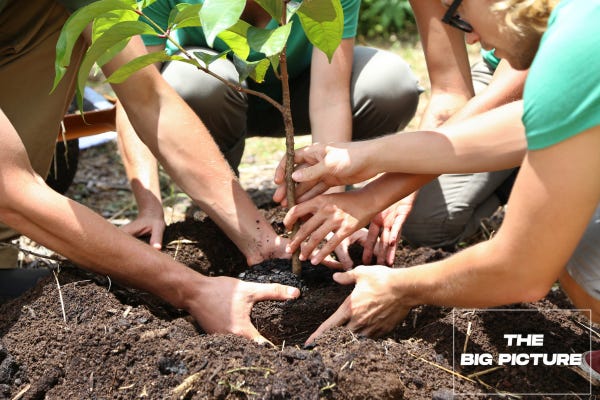
Community gardens and orchards on public use land—as well as changes to foraging laws in local, state, and federal parks and on public lands—are pathways to address food insecurity across the nation as well as a great way to build a sense of community.
In my town of about 8,000 people, a 4-H group asked the city council for a space for a community garden. Low income individuals and families could get a plot for free, others paid an annual fee for a plot. Fees went toward fencing, a shed for communal tools and supplies, lights, and security cameras.
Don’t know how to get a project like this started?
Assistance for getting ours started was provided by the American Community Gardening Association. Local chapters of the Future Farmers of America (FFA), 4-H, Boy Scouts or Girl Scouts are also often looking for projects and may be willing to take the lead if asked.
It was later decided that a community orchard would be added to our garden, and the city council authorized the planting of fruit trees along our city bike path.
Vacant lots, parks, and other public use lands can be used to create community gardens. City rooftops are also a possible resource for space to create container or raised bed gardens.
There are also grants available—from organizations like the National Head Start Association and Foodwell Alliance—for a wide variety of community projects, including gardens.
*hat tip to Linda Grimes Brandon for reminding me about the wonderful resources for gardening, livestock tending, and preserving foods available through the local Cooperative Extension—most are administered at the county/parish level and are affiliated with state colleges and universities.
Communal projects have the added benefit of developing partnerships.
Neighbors can decide to combine plots and resources, with each plot focused on a single fruit or vegetable and cooperating growers sharing their harvests with each other.
Partnerships can lead to discussions about topics beyond plants and into politics—namely who and what to vote for and why. Face to face communication is far more effective than over the internet.
Another food source is foraging, which is currently banned on most public lands.
But many plants could be sustainably harvested annually to supplement local communities or food banks. Proper training from foraging experts, supervision, and changes to current laws and statutes are all that stand in the way.
Foraging is by nature environmentally conscious, taking only what won’t hurt the flora and fauna. Plants that were sustainably foraged for millennia now sit untouched due to a hands off approach to conservation.
Alexis Nikole Nelson—a.k.a. the Black Forager—shares a lot of information on safe foraging and the origin of the laws that restrict it across her social media.
In my area, every spring people forage for “fiddleheads”—coiled, green shoots of the ostrich fern (Matteuccia struthiopteris)—on the banks of our local streams and rivers. In Maine, the banks of most rivers and streams are public use lands for boaters, people fishing, and foragers.
People stock their family’s freezer and roadside fiddlehead sellers pop up all over town. Fiddleheads are often compared to asparagus, spinach, green beans, and broccoli with a fresh, grassy, and slightly sweet, slightly nutty flavor and a tender-crisp texture.
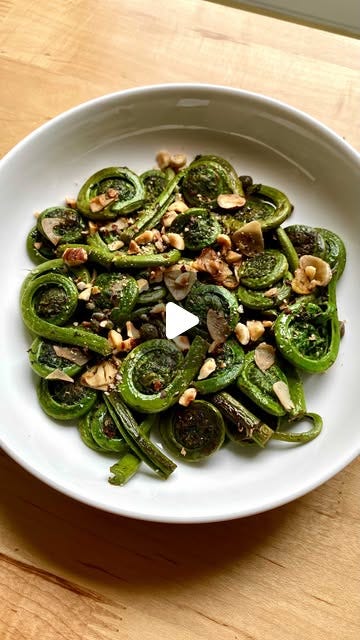
Fiddleheads are an Indigenous food passed on to the early European colonies. While they grow in much of the United States and Canada, the tradition of eating them has only endured in the northeastern U.S. and Atlantic Canada.
Wild growing berries and apples are also still commonly foraged where I live in northern Maine.
Local farmers in my area also allow food banks and churches to forage in their fields after their harvests are done. Harvests are done quickly to get the freshest food to market fast, so fields are never picked clean.
This form of foraging is on private land and always requires the owner’s permission, but it makes for a great community project.
Community livestock is also a possibility, especially small animals like chickens which take up minimal space, can provide both eggs and meat, and are adaptive to suburban and urban environments. Check your local ordinances—if unfavorable, a trip to a local council meeting might be required.
Chickens are also an excellent choice for bartering.
If a community coop isn’t an option, one neighbor with backyard chickens typically produces more eggs than they can eat. Any excess can be bartered for goods or services.
When money is scarce, bartering your talents for goods is a great fallback.
Using social media is one way to set up such exchanges, but old fashioned bulletin boards and signs can be effective if you want to restrict participation to a specific population.
Apartment dwellers might want to stay within their building, for example, or college students within their dorm.
Some of the exchanges and services offered in my community include:
person with egg laying chickens seeks someone with milking cow or goat
person who can sew clothes, curtains or quilts and do alterations looking for people to exchange with
will provide childcare in exchange for rides for weekly shopping and doctor appointments
person who can cook/bake looking for exchanges
yarn craft (hats, mittens, sweaters, afghans) exchanges
person with lawnmower/snowblower seeks person with vacuum cleaner (yard work/snow removal in exchange for house cleaning)
knowledge or skill training exchanges (guitar lessons, painting, language learning, etc…)
If you’ve got a skill or knowledge, there’s probably someone out there who’d be up for a trade.
Aside from online and building message boards, public libraries, churches, recreation centers, local stores, and community outreach programs are often willing to host a bartering board.
Again, local organizations like the Rotary Club, Elks, or other service organizations and local businesses might be willing to buy/sponsor the physical boards and volunteers can screen submissions (ensuring all needed information is included and services are appropriate) and keep the boards maintained.
Another good resource in difficult times is your public school district’s adult education department, your local rec center, and public library. All three are either looking for classes or demonstrations to add to their programs or are willing to provide free space for them.
Does your adult education or rec center offer cooking, baking, sewing, or food preservation classes? If they don’t, this is an opportunity to tap into the skills of our elders or ourselves.
Offer to teach a class or request a specific class if it isn’t offered.
My local adult education program has offered classes in the arts (music, photography, painting) and life skills (cooking and baking basics, food preservation, crockpot or instant pot cooking, basic vehicle maintenance). They’ve always been open to suggestions for new classes and volunteer instructors earn a stipend for their services.
Taking or teaching classes also offers another opportunity for community building and social networking.
New Year’s Resolve
There are money saving, or potential money making, options we could all benefit from. And they could pay off politically, too, by motivating voters to push the GOP out of power to ease economic conditions for working families, children, the elderly and the disabled.
Leading up to the 2026 midterms and 2028 presidential election, building bridges with disillusioned and disenfranchised voters is key to reversing course on the cruelty-based direction of Trump’s MAGA and Project 2025.
The largest voting bloc in the last election wasn’t for Trump. He won by default after 85.9 million eligible voters—with many identifying as left leaning to progressive in their politics—skipped the 2024 general election. Trump received 76.8 million votes compared to Vice President Kamala Harris’s 74.3 million.
Trump’s 1.6% victory would have been easily erased if a fraction of progressive non-voters had been convinced to vote.
There are things we can do individually and collectively to improve our own lives and build community in the coming new year.
Things that can pay dividends in 2026 and 2028.
~~~~~~~~~~