
Is The Voting Rights Act Next On The Supreme Court's Chopping Block?
A SCOTUS decision is expected soon that could have dire consequences for our democracy


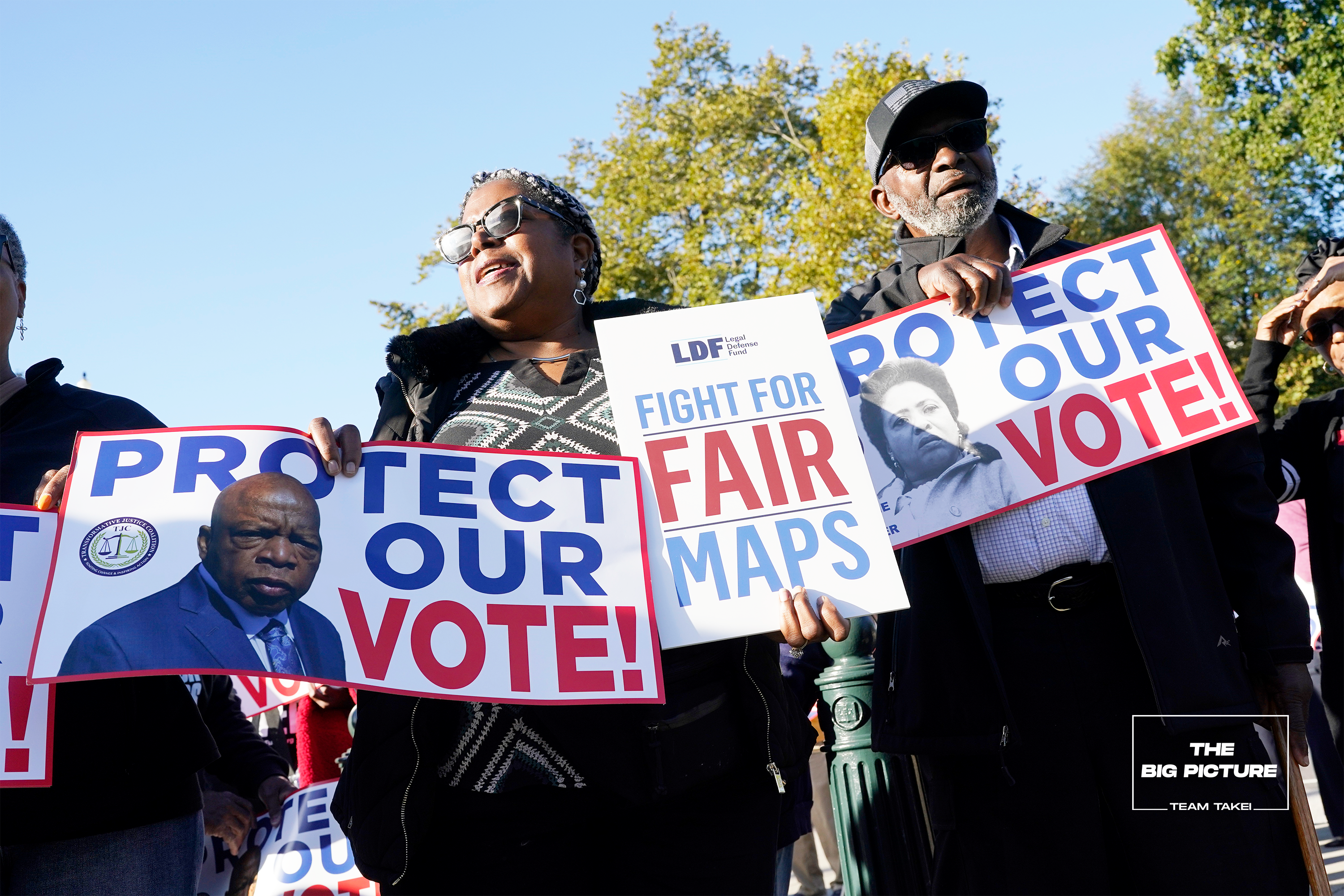
Any day now, the Supreme Court is expected to issue a ruling in Louisiana v. Callais, a case about whether Louisiana’s creation of a second majority-Black congressional district violates the Constitution and federal law. And it’s not looking good for voting rights or democratic representation.
If that sounds upside down to you – that a district drawn to ensure representation for Black voters in Louisiana somehow violates the Voting Rights Act (VRA) – well, welcome to the messy world of the Supreme Court docket in 2026.
Louisiana v. Callais
The congressional district at the center of the Callais case was initially drawn because, after the 2020 Census, Louisiana’s congressional maps only included one majority-Black district out of the six total congressional districts it was allotted. This was despite the fact that the state’s population is nearly one-third Black.
At the time, civil rights groups sued over the maps, arguing that the dilution of the Black vote in the state amounted to a violation of both the U.S. Constitution and Section 2 of the VRA, one of the remaining provisions of the law that litigators rely on to bring voter discrimination and vote dilution claims in court. A lower court agreed and ordered Louisiana to redraw its maps.
The new maps included this second majority-Black district to remedy the apparent VRA violation and ensure fair representation across the state. And in 2024, Representative Cleo Fields was elected to serve this new district. Yet the challenges did not end there: A group of Louisiana voters who describe themselves as “non-African American” decided to sue over this new district, arguing that, actually, the new map dilutes their vote under Section 2.

 | A guest post by
|