



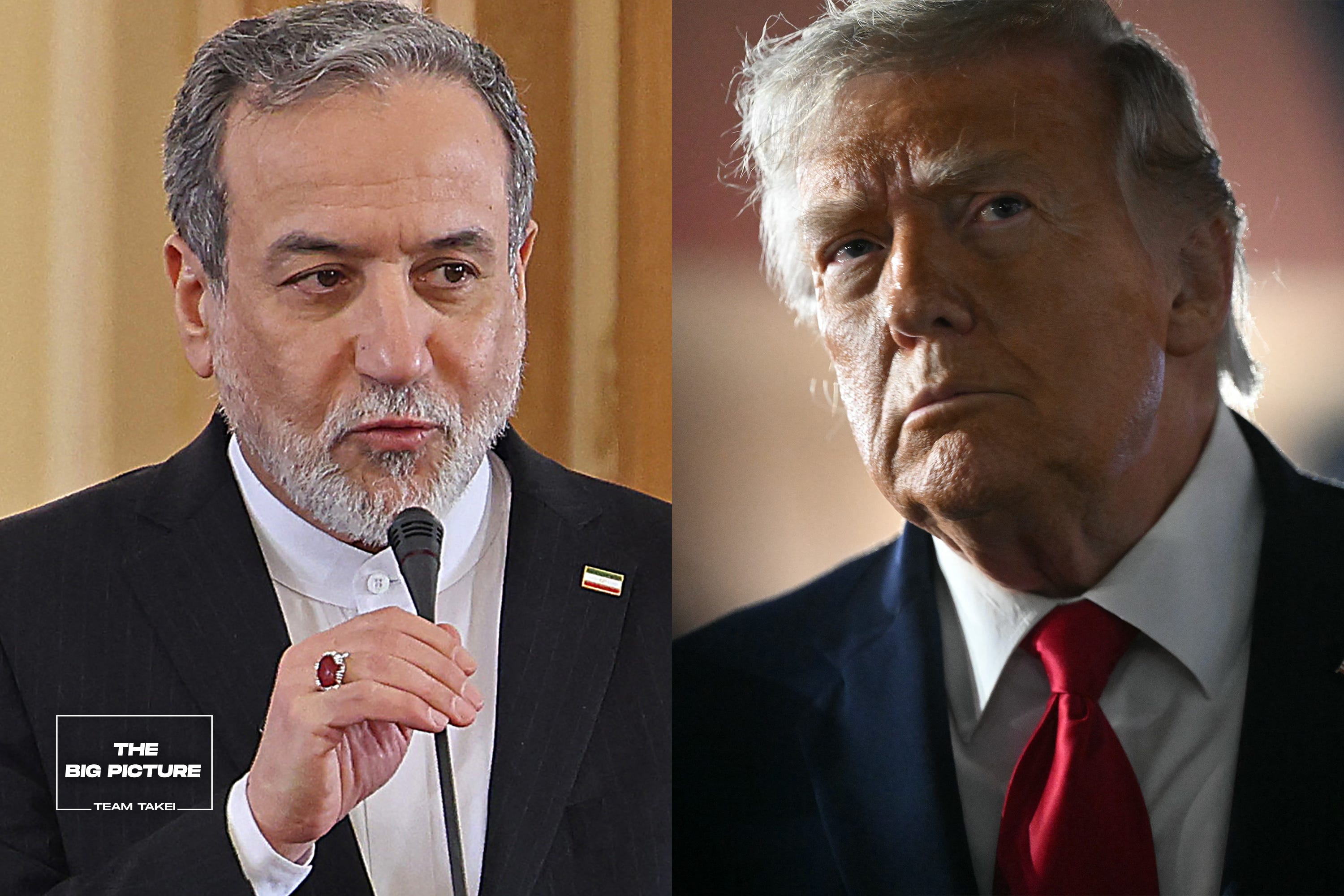
On Sunday, Donald Trump announced that the U.S. had reached a historic memorandum of understanding (MOU) with Iran, ending a war he started in February. The announcement, providing him a much-needed off-ramp for an unpopular war, was classic Trump: triumphalist, superlative and immediate. “The Deal with the Islamic Republic of Iran is now complete,” he posted on Truth Social. “Congratulations to all!”
If this feels uncomfortably familiar, it’s because we have seen this act before.
Back in May, around one month after enacting punishing worldwide tariffs as part of “Liberation Day,” Trump announced a “full and comprehensive” trade deal with the United Kingdom. That comprised just five pages of general commitments, with the hardest questions left to future negotiations. Seven months later, the deal was frozen.
Trump announced a Gaza ceasefire twice—once in January 2025 and again in October—with both structured so that Phase 1 delivered some immediate wins while Phase 2 left the most consequential questions for later. But Phase 2 negotiations never happened. The first ceasefire collapsed, and the bombing resumed. Then the second ceasefire produced the same result for the same reasons.
His pattern is consistent: announce the deal, declare victory, then defer the hard parts. The Iran MOU presents the same architecture with higher global stakes. Behind Thursday’s signing ceremony in Geneva sits a 60-day negotiating window, during which the United States and Iran are supposed to resolve the questions that started the war and kept it going. These include Iran’s nuclear program, the reopening of the Strait of Hormuz, sanctions relief and the proxy forces that Iran funds across the region. These details are the substance of the conflict itself, but they are being papered over for a splashy announcement.
Three risks explain why the ceremony is likely to be the high point of agreement rather than the beginning of any substantive progress. Each has a counterpart in what we’ve seen from Trump before.
Risk One: The fine print is the actual agreement
When Trump announced a “full and comprehensive” trade deal with the U.K. over a year ago, Council on Foreign Relations trade policy fellow Inu Manak offered an immediate critique:
The agreement’s five pages of text are minuscule compared to the phonebook size of most trade deals, which likely means the announcement’s immediate economic effect will be similarly small.
Manak concluded that
this deal is a framework for future talks, though it has some immediate effect on a few major trade irritants. What this means is that negotiations will be ongoing for the foreseeable future.
The UK Parliament’s Business and Trade Committee reached the same conclusion in its formal review, calling it “limited in scope and not legally binding” and noting that it provides a “framework” and the “possibility of a comprehensive Economic Prosperity Deal in future.” The parties left major sectors for future discussion, including pharmaceuticals, digital services, steel and aluminum—areas where American and British interests conflict most directly.
Of particular unresolved importance was the digital services tax, a two percent levy the UK charges on revenues from American technology companies. Chatham House described the bind it created for the British government:
It would likely be unpopular for a government that has cut welfare services and introduced new taxes on UK businesses, but it also risks undermining wider attempts to regulate big tech.
The parties were far apart on the tax going into the deal announcement. Trump had publicly called the tax “extortion,” while the UK Treasury depends on the £800 million it raises annually. Despite this gap, the parties plowed ahead with the deal announcement anyway, as if the issue would resolve itself. By December 2025, per reporting by The Register, the $42 billion Tech Prosperity Deal announced during the King’s September state visit was completely frozen because of a continuing impasse over that very digital services tax.
Gaza followed the same Trumpian template, twice. The January 2025 ceasefire was structured so that Phase 1 delivered everything that could be packaged and announced: hostage releases, prisoner swaps, an Israeli pullback. It left to Phase 2 the questions the entire conflict was actually about: a permanent ceasefire, full Israeli withdrawal, the political future of Gaza. Those negotiations were supposed to begin during Phase 1.
Time magazine’s reconstruction of what happened was blunt:
The ceasefire between Israel and Hamas negotiated in mid-January seems to have been written on tissue. It frayed midway through the first of three phases, when Israel declined to negotiate for the second phase.
When Trump announced a second Gaza ceasefire in October 2025, the structure was identical. Phase 1 delivered some immediate wins to tout, but Phase 2 was again deferred. The hard parts went unresolved because putting them in the agreement would have prevented the agreement, and preventing the agreement would have prevented the announcement.
The Iran MOU arrived on Sunday caked in the same foundation. Pete Hegseth appeared on CBS’s Face the Nation and was asked what distinguished it from the nuclear deal Barack Obama signed with Iran in 2015. His answer? “The document says Iran will never have a nuclear weapon, won’t seek one, won’t buy one, won’t have one.”
Host Margaret Brennan stopped him. “The JCPOA said that too.” She was correct; the preface to Obama’s 2015 agreement stated, “Iran reaffirms that under no circumstances will Iran ever seek, develop or acquire any nuclear weapons.”
Iran signed that commitment, then violated it after Trump withdrew from the deal in 2018, and is now basically being asked to sign it again as the MOU’s headline achievement. In short, Iran is being asked to make a recycled promise.
The question the MOU defers—the one sitting at the center of every Iran nuclear negotiation for two decades—is enrichment. To build a nuclear weapon, you need uranium processed to a very high level of concentration. The same equipment and expertise that enrich uranium for a civilian reactor can, if the centrifuges are run longer and harder, produce weapons-grade material. This is why the United States insists that any Iranian enrichment capability is a weapons risk, and why Iran, which paid an enormous cost in sanctions to preserve that capability, treats the demand that it surrender enrichment as an impossibility.
That disagreement predates the Trump-Iran MOU by two decades. It is the reason the 2015 Obama nuclear deal was structured the way it was, capping enrichment rather than eliminating it. And it is the reason Trump called that deal a failure and tore it up in 2018.
The question of enrichment will now go into a 60-day negotiation window unresolved. But the parties are as far apart as ever. U.S. Special Envoy to the Middle East Steve Witkoff, a real estate developer and friend of the President, stated the American position in May 2025: “We cannot allow even 1 percent of an enrichment capability.” Iranian Foreign Minister Abbas Araghchi replied the same day: “Enrichment in Iran will continue with or without a deal.”
A year later those remain the parties’ positions. The most recent talks did produce a specific number: the U.S. wants Iran to suspend enrichment for 20 years, while Iran has offered five. The MOU left those numbers where they were and pressed forward with a signing ceremony scheduled for Thursday.
Iran’s official state outlet IRNA clarified what Tehran believes it has agreed to sign, and it bodes poorly for any comprehensive agreement. As NBC News reported,
According to IRNA, the “current draft agreement” states that “Iran undertakes no new commitments” on nuclear weapons, with further negotiations on the issue set to take place in a 60-day period following the signing of the agreement.
Those negotiations would focus on “the continuation of Iran’s peaceful nuclear program, the lifting of unilateral American sanctions and mechanisms for compensation and reparations,” IRNA says.
Council on Foreign Relations senior fellow for Middle East and Africa studies Steven Cook, who has tracked these negotiations across multiple rounds, described the horizon. “We have been here before only to discover the parties cannot bridge the remaining gaps,” Cook noted. “Negotiations on the outstanding issues, especially on Iran’s nuclear program, will be long and difficult.”
Iran’s fine print is as dense as any U.K. trade deal or Gaza peace plan. It defers the question of whether enrichment actually continues, and it provides just 60 days to bridge a 15-year gap on a question both sides have declared beyond negotiation.
Risk Two: The politics won’t cooperate
Announced deals require cooperative partners. Trump’s method assumes that the act of announcing a deal creates the political conditions for its larger implementation, as if the ceremony itself can produce the political will.
The experience of the past year suggests the reverse: An announcement often energizes and organizes opposition before the ink has even dried.
When Trump announced the UK trade deal in May 2025, the British government’s most intractable constraint was domestic politics. The digital services tax raised huge sums from American technology giants. Surrendering it to Washington would have meant telling British voters that the government had handed Google, Amazon and Meta a tax break at a moment of public service cuts and rising business taxes.
Starmer’s own words the day after the announcement revealed the tension with domestic politics clearly. Asked whether he could guarantee no changes to the digital services tax, Starmer declined. In doing so, he defined exactly what the announcement had achieved––and what it had merely postponed.
“On digital services, there are ongoing discussions, obviously, on other aspects of the deal, but the important thing to focus on yesterday is the sectors that are now protected that the day before yesterday were very exposed,” Starmer said.
In plain terms, Starmer assured voters that the industries facing immediate tariff exposure, such as cars, aluminum and steel, got relief. The conflict that Washington most wanted resolved, namely the digital services tax, got a deferral. Starmer announced the first part as the deal’s achievement and left the second for later. Seven months later, that unresolved question froze the entire Tech Prosperity Deal.
The Gaza deal made the same dynamic visible on a shorter timeline and with even less ambiguity. When Trump announced the January 2025 ceasefire, the opposition inside the Israeli government erupted. Right-wing Israeli minister Bezalel Smotrich threatened at the time to “bring down” Netanyahu’s ruling coalition if the Gaza Strip was no longer occupied by Israeli forces. As Global Security reported,
Speaking with Army Radio, the far-right minister said that Israel “must occupy Gaza and create a temporary military government because there is no other way to defeat Hamas.”
”I will bring down the government if it does not return to fighting in a way that [leads to us] taking over the entire Gaza Strip and governing it,” the minister added.
Netanyahu knew the extremists’ positions before he signed on to the deal. He had governed with them long enough to know exactly where their red lines were. Yet the ceasefire announcement proceeded regardless, only to collapse before Phase 2 could begin.
When Trump announced the second Gaza ceasefire in October, Ben-Gvir and Bezalel Smotrich again opposed it that same day. A Netanyahu adviser was unambiguous about Israel’s intentions toward Phase 2, describing its implementation—a permanent ceasefire and complete withdrawal from Gaza—as an “imaginary, impossible and unacceptable event.” According to Security in Context, Smotrich then moved to oppose the deal:
His Religious Nationalist party did not withdraw from the Government, apparently to retain some influence in the period leading up to the planned second stage of the ceasefire agreement, and to scuttle it if he can.
Iran’s version of this problem also turns on who has the real power to block the deal. Here, the central obstacle is the institution with the power to constrain even the Supreme Leader.
The Islamic Revolutionary Guard Corps (IRGC) is Iran’s most powerful military and political force, controlling large swaths of the Iranian economy and funding the proxy network from Hezbollah in Lebanon to the Houthis in Yemen. Its two primary sources of institutional power are precisely what any serious final agreement would require it to surrender: the proxy network it built and the nation’s ballistic missile program.
When Iran’s previous Supreme Leader was killed in the February strikes, the IRGC forced through the appointment of his son, Mojtaba Khamenei, as successor. It successfully outmaneuvered the pragmatist faction conducting the negotiations. One expert described the new Supreme Leader as his father “on steroids.”
Per reporting by The Jerusalem Post, the implications for the negotiations were stark:
“No one knows what is really happening,” The Telegraph quoted one Iranian official as saying. “Most officials hear only from TV what’s happening. They do not know what we are giving up.”
On the Iranian side of the table sits a pragmatist faction, led by Foreign Minister Araghchi and President Pezeshkian, that has negotiated seriously and signaled genuine flexibility. But the IRGC has a record of intervening just as agreement comes within reach.
In the days before the MOU was announced, Araghchi submitted Tehran’s response to the draft agreement to Khamenei for approval on a Saturday, telling mediators he expected to have it to the White House by Sunday. Before the response arrived, Israel struck Beirut. Iran then launched a missile attack on Israel, Israel retaliated, and the draft went nowhere.
The hardline faction inside Iran is organized and explicit about its intentions. The Maritime Executive reported what that disposition means in operational terms:
IRGC hardliners appear determined, if necessary, to sabotage even modest compromises that the “moderates” clustered around the Foreign Minister and President Masoud Pezeshkian might be prepared to make.
In London, Starmer faced constraints from his own voters. In Jerusalem, Netanyahu faced constraints over Gaza from his coalition. In Tehran, negotiators face constraints from the institution that can overrule the Supreme Leader. The deal announcement in each case treated those political constraints as ancillary, but they remain foundational.
Risk Three: Third parties blow everything up
Even when both primary parties to an announced deal are willing to implement it, a third party with its own agenda and no obligation to the agreement can collapse what the principals spent months building. This is the risk the announcement method is least equipped to address, because third parties are by definition outside the room where the deal was made.
The UK trade deal’s most consequential third-party constraint was the European Union. Britain left the EU in 2020 but remained deeply integrated with it economically. Any significant UK concession to Washington carried a potential cost in its relationship with Brussels, which sets regulatory standards UK exporters must meet to access the European single market. As the Council on Foreign Relations noted, this put all European countries navigating the same U.S. tariff pressures in a similar bind:
France’s calls for retaliation and use of the EU’s new “anti-coercion instrument” were politely but firmly rebuffed by Eastern European member states, which remain desperate to keep Trump and the United States engaged on the side of Ukraine in its war against Russian aggression.
The UK faced its own version of that two-level game. Every concession to Washington carried a potential cost in Brussels, and every concession held back to protect the EU relationship gave Washington a new reason to freeze the next phase of the deal.
Gaza’s third-party problem arrived from two directions at once. Hamas’s military wing operated with its own chain of command, independent of the political bureau that negotiated the ceasefire terms. And within the Israeli government, Defense Minister Israel Katz and Finance Minister Smotrich functioned as internal spoilers. They were members of the governing coalition who had committed, publicly and in advance, to preventing the deal’s most important provisions from taking effect.
For the Iran MOU, the third-party risks abound, but Israel is the most immediate. Its military operates outside the MOU’s framework, answering to its own domestic political pressures. It has already demonstrated, twice before this MOU was signed, that it will act at the precise moments when U.S.-brokered ceasefires are most fragile.
In April 2026, hours after the first ceasefire was announced and Hezbollah signaled a pause in its attacks, Israel launched what it described as its most powerful strikes on Lebanon, killing at least 357 people. The ceasefire was hours old.
Hezbollah is the second and often less-discussed third-party risk. Iran funds and arms it, but Hezbollah operates with its own command structure and its own political calculus. Ten days before the MOU was signed, Hezbollah’s leader, Naim Qassem, made the group’s position explicit after Israel and Lebanon had provisionally agreed on a ceasefire framework:
The Lebanese militant group Hezbollah on Thursday rejected the cease-fire proposal agreed upon by Israel and Lebanon after U.S.-led negotiations. “We are concerned only with a comprehensive cessation of aggression, a cease-fire, and the withdrawal of Israel,” said Naim Qassem, leader of the Iran-backed Shi’ite Muslim group that was not party to the talks.
The Iran MOU pairs the Lebanon question with the nuclear enrichment question, both inside the 60-day window. A Hezbollah strike could prompt Israeli retaliation, which could prompt Iran to suspend talks. No coordination required.
The other side is on to the game
The Trump pattern is consistent enough by now to function as a prediction. That means any country making a deal with Trump can take easy advantage.
When Keir Starmer stood next to Trump in May 2025 and called the deal “just the start” of a “wider economic deal,” the conflicts that would eventually freeze it were already on the table, and he knew it. Seven months later, the Tech Prosperity Deal was frozen over the digital services tax, exactly as expected. But Starmer got what he needed out of Trump: immediate protection for other key industries from Trump’s tariffs.
In Gaza, Netanyahu played the same game. Even though members of his government were unambiguous about Israel’s intentions toward Phase 2 before the ceasefire framework had even been formally ratified, Phase 1 delivered the hostage releases Israel needed. Phase 2 was the price Israel had all but announced in advance it would refuse to pay, but Trump announced the deal anyway, and Israel played along.
Now it’s Iran’s turn. It understands exactly what the 60-day window is: a period during which Iran keeps the ceasefire gains, including partial sanctions relief, international legitimacy and a reopened Strait. The harder questions, including the nuclear question, stay where they have long been. If the 60 days expire without agreement, Iran is in several respects better positioned than before the MOU, having extracted immediate concessions while the hard questions remain scheduled, deferred and unresolved.
The IRGC hardliners understand this too. Their interest is in ensuring the follow-on talks produce nothing of substance while the clock runs and the gains already extracted stay in place. A deal that never closes is, for them, a deal that never threatens their true interests or power.
Trump will get the fanfare and the headlines he wants when the deal gets signed in Geneva on Thursday. But the actual hard work on the thorniest problems lies beyond the capacity of Trump’s negotiators, and our adversaries know this.
And that’s just fine by Trump. He has never been interested in real solutions, only the appearance of them.
As my grandma, RIP, used to say, "It's all just a bunch of hooey!"
But I'm glad that Vance will be scapegoated. That part is fun. Walk the plank, JD!
The thing about this "deal" is that when it collapses the average American is going to feel the consequences.