



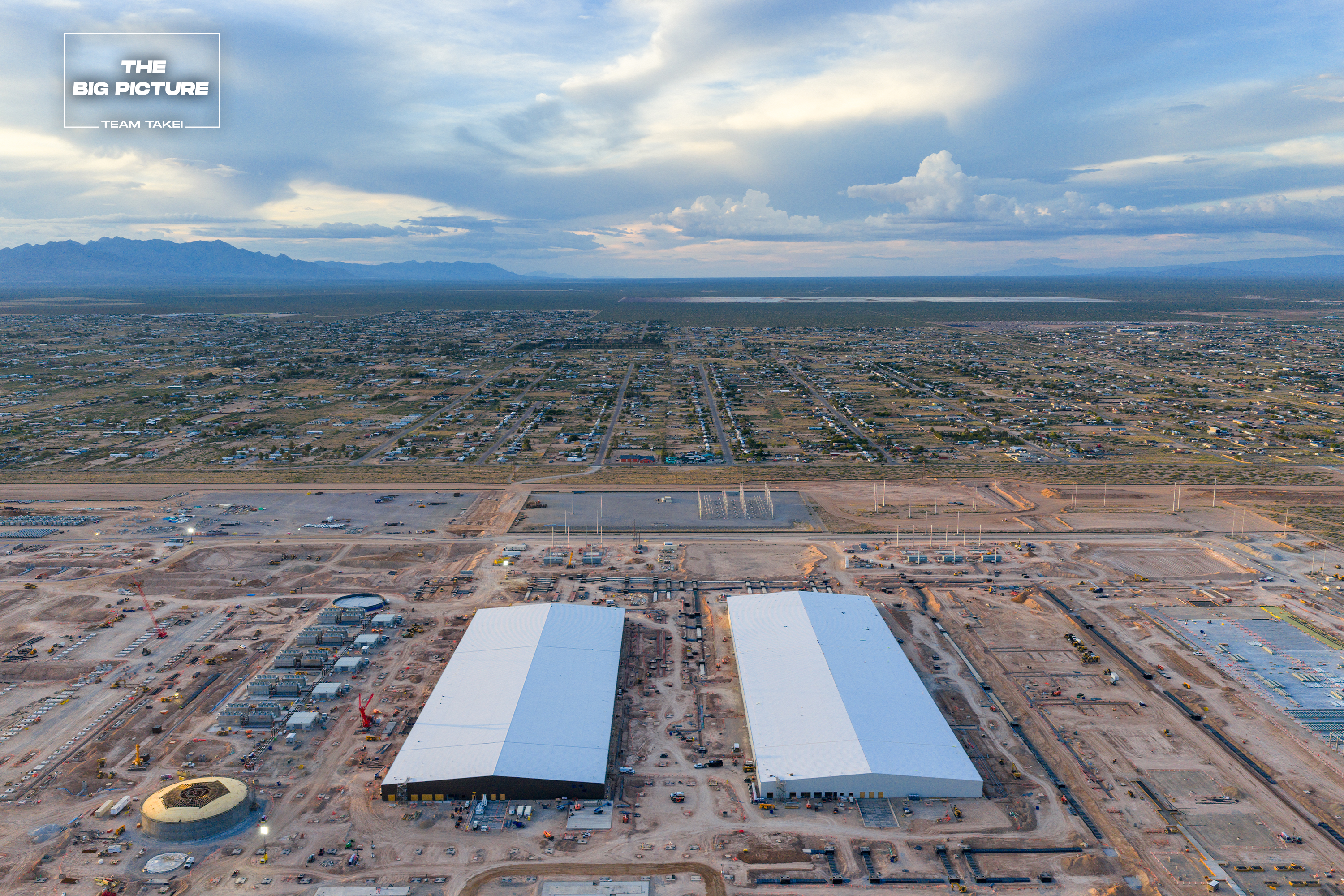
Semiconductor and AI giant Nvidia announced this week that it would guarantee up to $105 billion in lease and power payments for a single data center campus in rural Ohio. That cleared the way for a 20-year lease by OpenAI to build a campus on a site once used to enrich uranium during the Cold War. The project, to be constructed by SoftBank’s SB Energy, envisions 9.2 gigawatts of new gas-fired power.
Similar announcements have dropped repeatedly over the past year: another monster facility burning enormous amounts of fossil fuels, creating noise and environmental damage, straining water supplies, driving up local utility rates and remaking a rural county seemingly overnight.
Ohio activists have already tried to stop data center projects like this one. A grassroots campaign called Conserve Ohio spent months gathering signatures for a constitutional amendment that would have banned any data center drawing more than 25 megawatts, effectively outlawing the type of facility Nvidia just financed. But organizers conceded in June that they’d come up short of the roughly 413,000 signatures required for the November ballot this year.
Big Tech has taken note. In response to anti-data center referenda and growing state restrictions, the industry has moved aggressively to accelerate its buildout. That in turn has created significant political heat ahead of the 2026 midterms, as the industry faces broad opposition across the political spectrum. The blowback has already cost some officials their seats in states from Georgia to Utah to California.
Despite the widespread unpopularity of new data centers, Donald Trump remains their biggest champion. He spent the summer as the tech industry’s most visible cheerleader, talking up the need to keep pace with foreign competitors while highlighting the jobs that the centers create. His position may endear him to the industry, but it exposes him and his own party on an issue that resonates increasingly with voters of all stripes.
The rise of the machines
A data center is, at its simplest, a building full of computer servers. Data centers are the physical infrastructure behind cloud storage, online streaming and, more recently, the training and operation of artificial intelligence systems.
The current wave of “hyperscale AI facilities” stands out from earlier buildouts because of its sheer scale. These data centers draw far more electricity and water than the server farms that powered the internet’s first decades, and they are rising up from once empty fields at a pace local governments have never faced before. Seeking to manage and regulate that pace, lawmakers in more than 30 states have introduced upward of 300 bills addressing data centers in 2026 alone, covering moratoriums, tax incentives and energy policy.
The dollars behind the buildout are equally unprecedented. Alphabet, Meta, Microsoft, Amazon, Oracle, and AI developers including OpenAI and Anthropic are projected to spend $7.6 trillion on data centers, power plants and machine learning through 2031. National electricity demand from data centers is projected to nearly double, from 80 to 150 gigawatts, between 2025 and 2028. That’s roughly equivalent to adding a country the size of Spain to the American power grid in just three years.
Two states have absorbed most of the data center construction now underway. According to a map compiled by Visual Capitalist, Texas and Virginia had more than 100 projects actively under construction as of the end of the first quarter: 140 in Texas and 136 in Virginia. Georgia and Ohio are a distant third and fourth, at 56 and 51. Virginia’s concentration of existing centers sits in Loudoun, Prince William and Fairfax counties, the corridor known as Data Center Alley. But Texas is projected to soon overtake Virginia as the overall leader, once projects announced but not yet begun are included.
California has anywhere from fewer than 100 to more than 400 existing data centers, depending on how they’re categorized and whether a large campus is counted as one site or many. Nearly every tracker places California third in the nation, behind only Virginia and Texas. But the number of centers in the Golden State has plateaued rather than accelerated; power constraints and high land costs have capped how much new capacity the state can add.
Georgia’s announced pipeline, by contrast, is growing faster than almost anywhere else, anchored by developments like OpenAI’s Project Camellia in Effingham County. And Ohio, now home to the largest single financing commitment, has drawn billions more in investment commitments from Amazon and Microsoft around Columbus.
The nuisance next door
While many state and local officials have proved eager for investment dollars from the boom in data centers, their constituents are paying the price. In Loudoun County, Virginia, residents living beside one of the region’s data center clusters describe diesel generator fumes that irritate bronchial passages and awaken them at night. One neighbor called the facility “a curse on our life here.”
The Environmental and Energy Study Institute has cataloged similar complaints from data center neighbors elsewhere: headaches, vertigo, nausea, sleep disturbances, ear pain and hypertension, which residents attribute to the constant hum of cooling systems, generators and fans that operate around the clock. Backup generators at some sites can reach 105 decibels, louder than a running snowmobile. Residents in some states have now sued over the ceaseless noise.
Water use is another recurring grievance. In El Paso, Texas, a Meta data center is projected to draw roughly 480,000 gallons of water a day on average, spiking to 2.5 million gallons on the hottest days. That has become a flashpoint for organized protest in a city with a history of drought restrictions. A single mid-sized facility can use as much water as a small town; the largest campuses draw close to 5 million gallons daily, comparable to a city of 50,000 people.
Then there are the added costs to consumers. Data centers accounted for four percent of total U.S. electricity use in 2024, with demand expected to more than double by 2030. In states with heavy data-center concentration, wholesale electricity prices have climbed as much as 267 percent over five years. Georgia offers a concrete example of that curve: the average residential Georgia Power bill climbed more than $43 a month between 2022 and 2025, a rise utility watchdogs have tied to building out grid capacity for large data center customers. Utilities have largely passed those costs on to ratepayers.
Polling worse than nuclear
Opposition to data centers crosses partisan lines. In a survey taken in March 2026, Gallup found roughly seven in 10 Americans opposed to data center construction in their own area. A Reuters/Ipsos poll found similar resistance in June: 57 percent of respondents, including two-thirds of Democrats and half of Republicans, said they would oppose a data center built in their community, while just 14 percent said they would be comfortable with one nearby. The same poll found opposition climbing to 59 percent opposed and 10 percent in favor, when a proposed site would sit within 10 miles of a respondent’s home.
A separate national survey found that data centers are less popular locally than gas-fired power plants, wind farms or even nuclear facilities. Heatmap’s polling analysis called the result notable, given that nuclear has “long been the go-to reference for ‘scary energy facility.’”
The backlash has already produced a coordinated national response. On July 18, 2026, the advocacy group HumansFirst — co-founded by a former Tea Party leader who compared the movement to that 2009 populist wave — organized 142 protests across 42 states. It was the first nationally coordinated day of action against data center construction. Organizers pointed to a broader pattern already underway: tens of billions of dollars in AI infrastructure projects delayed or blocked by local opposition, according to research firm Data Center Watch.
Labor’s split loyalties
Organized labor has a love/hate relationship with AI and data centers. AFL-CIO President Liz Shuler has spent months balancing members who see data center construction as a genuine source of job growth against those who fear AI will ultimately eliminate their jobs.
Construction unions, unsurprisingly, have positioned themselves as champions of the buildout. North America’s Building Trades Unions (NABTU) has negotiated project labor agreements on some of the industry’s largest developments, including OpenAI and Oracle’s Stargate campus in Michigan and the Project Blue data center in Arizona. Meta signed a first-of-its-kind national partnership with NABTU, which represents more than 3.2 million skilled craft professionals across the U.S. and Canada, covering future data center builds. The labor composition of data center construction likely mirrors commercial construction overall, which is roughly one-third union, according to an Associated General Contractors of America survey.
This week’s big Ohio announcement extends the pattern. OpenAI and SB Energy say their Nvidia-backed campus will generate 35,000 construction jobs and 2,500 permanent operating positions once complete. These are the kinds of numbers unions point to when they defend such projects.
Unions can bring money, organizing infrastructure and credibility with working-class voters into fights where the industry badly needs local political cover. Construction unions in particular “also often provide companies with critical political support in local communities, especially where data center construction remains unpopular,” Bloomberg observed. In practice, that makes them the tech industry’s most effective on-the-ground counterweight to the ratepayer and nuisance complaints driving local political opposition.
Where the people have spoken
In June 2026, Monterey Park, California, became the first city in the nation to pass a permanent, voter-approved ban on data centers. Measure NDC passed with more than 86 percent support, after residents organized against a proposed quarter-million-square-foot facility that opponents said would have tripled the city’s electricity use.
Port Washington, Wisconsin, delivered a similar message two months earlier, through a narrower mechanism. Voters there approved, with 66 percent of the vote, a referendum requiring voter approval for future tax-incremental financing districts valued at more than $10 million. The vote came in direct response to a $15 billion AI campus backed by OpenAI and Oracle, already approved for $458 million in local tax benefits before the referendum reached the ballot. The measure does not undo the tax break already granted, however, and it faces a legal challenge from a coalition of business groups led by the Metropolitan Milwaukee Association of Commerce.
Primaries have told a parallel story, with some lawmakers’ careers ended over their support for data centers. In Utah, Senate President J. Stuart Adams, one of the most powerful Republicans in the state, lost his June primary after backing the Stratos data center project near the Great Salt Lake. His challenger, Stephanie Hollist, made the project the centerpiece of her campaign. Asked at a June forum what she’d prioritize on water management, she didn’t hesitate: “I might start by not proposing the largest data center in the country.” The line drew loud applause. Former Box Elder County Commissioner Lee Perry, defeated in the same cycle over the same project, cited the cause plainly after conceding: “Do I think that the data center vote cost me the election? Yes I do.”
In Georgia, Democrats Alicia Johnson and Peter Hubbard flipped two statewide seats on Georgia’s Public Service Commission in November 2025, marking the first Democratic statewide constitutional office wins in Georgia since 2006. Both won with roughly 60 percent of the vote after campaigning on anger over utility bills tied in part to grid expansion for data centers.
In Festus, Missouri, four incumbent city council members up for reelection in April 2026 lost to challengers who ran explicitly against a proposed $6 billion data center, in an election where turnout was more than double the previous year’s. A separate push to recall the mayor and the council’s remaining data-center supporters is still working through signature verification, indicating the fight in Festus isn’t finished.
In 2023, in what’s now cited as an early reference point, voters in Cascade Locks, Oregon, recalled two port commissioners over a data center negotiation; the project was canceled within weeks.
Statehouses have begun to act on their own, often without waiting for a ballot measure or primary. New York became the first state to impose a statewide moratorium on hyperscale data centers when Gov. Kathy Hochul signed an executive order last month that paused certain discretionary environmental permits for up to a year on projects using 50 megawatts or more of power. The pause allows regulators to build a framework covering ratepayer costs, water use and community benefits. The order was narrower than the Responsible Data Center Development Act, which the legislature had already passed that covered data centers at just 20 megawatts and up. Hochul has not yet signed that bill. Her Republican opponent in the governor’s race, Bruce Blakeman, opposes the statewide pause and argues local governments should be free to negotiate their own data center deals.
Texas took a narrower, more contested route. In early August, Gov. Greg Abbott directed state regulators to audit every data center project still moving through the grid connection process, covering tax breaks, water use and community impact, before any can proceed. The directive reaches only projects connecting to the ERCOT grid, so a data center capable of generating its own power can bypass it entirely. Critics on the right and left called it insufficient: Texas Agriculture Commissioner Sid Miller, a fellow Republican, dismissed it as “all hat and no cattle — empty political rhetoric wrapped in meaningless fluff,” while Democratic gubernatorial nominee Gina Hinojosa called it “another strongly worded letter” that “no one buys.”
The holdout in the White House
Against this national pushback, President Trump’s posture on data centers stands out. Despite lawmakers losing primaries and city council seats to local anger over the issue, Trump spent the summer praising and promoting the buildouts. When Texas Gov. Greg Abbott paused approval of new data centers in early August, Trump called the move “a mistake.” He stated, “I saw Texas the other day sort of is against data centers. I think it’s a mistake… because there are other communities that want it. When a community wants it, it means a lot of money is going to come into that community.”
A CNBC analysis of the coalition organizing against AI infrastructure, which includes religious leaders, labor unions and local activists, flagged the political gambit for Trump. That coalition, it concluded, “poses a political problem for anyone who gets on the wrong side of that issue. And President Donald Trump is the person most at risk.” CNN reached a similar conclusion, describing data center opposition as close to “a true populist issue built for this moment” and calling Trump “one big exception to the growing political stampede away from data centers.”
Democratic officials elsewhere have made the opposite bet. Virginia Gov. Abigail Spanberger has repeated a version of the same line since her campaign: “I do think it’s important that the brunt of data centers not be put on ratepayers, and in fact that they pay their own way and their fair share.” It became the animating principle behind Virginia’s first-ever statewide data center energy consumption tax, signed into law this year.
The White House’s response to voter anger has been to insulate the buildout from complaints, not slow it down. Trump has expanded what the White House calls the Ratepayer Protection Pledge. It was signed by 23 governors, all Republicans, and at least 187 companies, including utilities, cooperatives and developers. The signatories committed that data center growth won’t raise electricity costs for households. But the pledge is voluntary and nonbinding, and it has created new sore spots for opponents.
Nvidia’s guarantee of up to $105 billion to support the new OpenAI-SB Energy campus in Ohio, for example, came without any companion commitment on ratepayer costs. The announcement arrived just as Ohioans faced projected average summer electricity costs topping $800, a 17 percent jump over last year.
The White House continues to frame deals like the Nvidia-backed OpenAI campus as evidence of American AI dominance. But the voters who organized Ohio’s ballot campaign, and those who have already unseated officials elsewhere over similar projects, see it far differently. To them, it’s evidence of unbridled corporate greed and abuse, visible in their own backyards and on their ever-rising utility bills.
With the midterms now just two and a half months away, support for data centers is fast becoming a defining populist issue. This is especially true among rural voters whose elected representatives turned a deaf ear to their concerns and whose president continues to bat for a tech industry that has now become a curse on their lives.
With all the roof squarefootage one would think that they might be interested in solar power?
I've been seeing this with my own eyes this year as I drive rural northern Ohio and Indiana between Cleveland and Chicago. (I never take the turnpike: privatization has made it too expensive and besides, I can stop at farmers markets and wildlife preserves) "No Data Center" Signs are everywhere. You know what else I noticed on my trip a few weeks ago. ALL of the Trump signs and flags have disappeared.