

The Blueprint To Unrig Our Democracy From Right-Wing Rule
Ben Wikler helped fix Wisconsin. Now he has a plan to restore democracy nationwide.


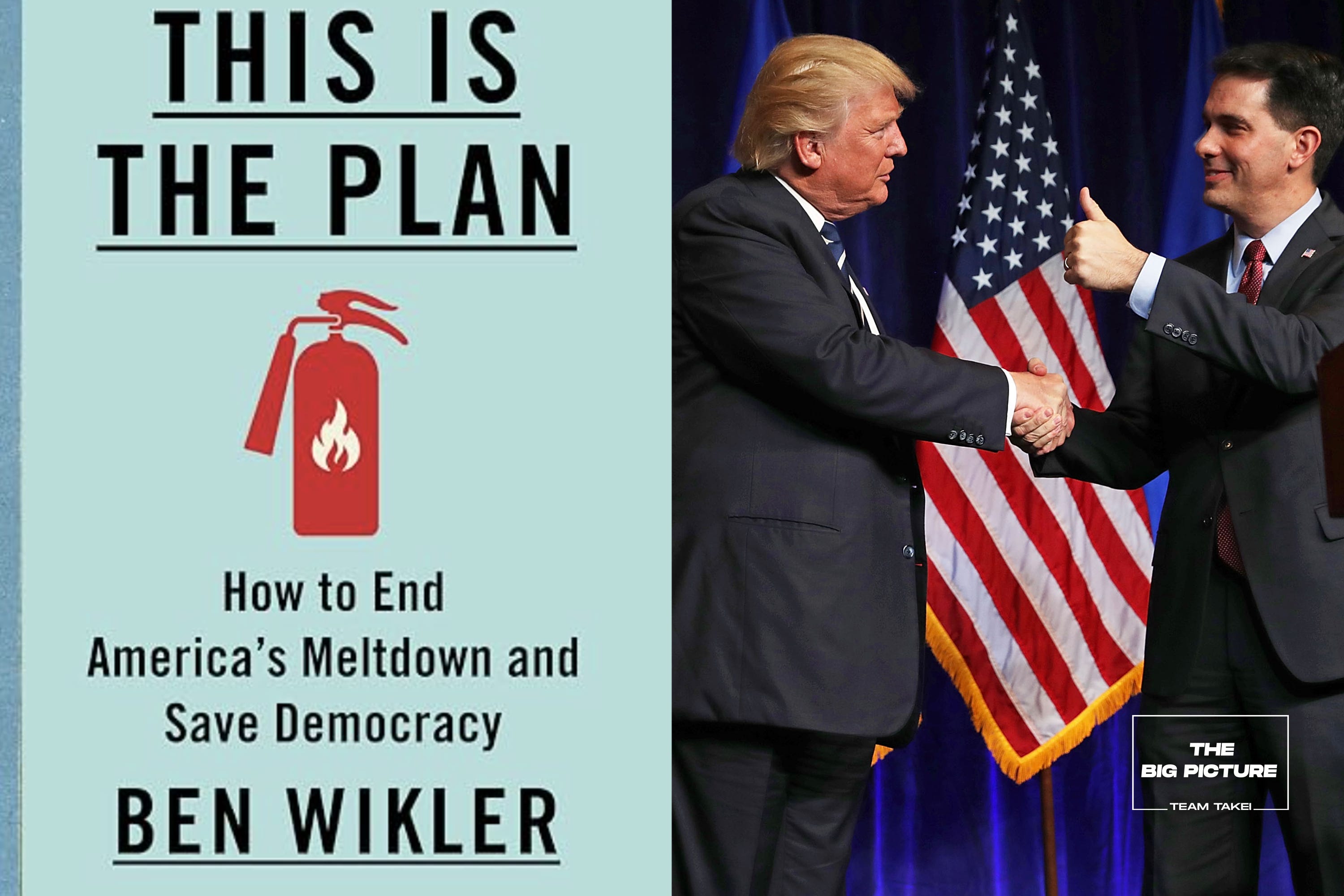
In 2010, Republicans in Wisconsin rode the Tea Party wave to a trifecta of government control in the state, winning the governorship and both houses of the state legislature. And with that power, Republicans proceeded to cement themselves into what they hoped were permanent majorities.
In 2011, Republicans passed partisan gerrymandered district maps that were so rigged in their favor that, in a year when Barack Obama won the state by more than six points and state Republican candidates received less than a majority of the vote, Republicans ended up with 60 out of 99 State Assembly seats.
Wisconsin Republicans tried—and for a time succeeded—to establish minority rule in the state. Even when they lost, they won. Journalist David Daley aptly called it a “democracy desert.”
If that sounds familiar, it should.
Donald Trump and MAGA Republicans in Congress and in red state governments around the country have tried to implement minority rule at a larger scale. They have eaten away at our foundations of democracy to install permanent Republican power. So if we want to unrig our system and restore our democracy, we’re going to need a plan.
Thankfully, Ben Wikler has just released one.
Wikler, who served as the Wisconsin State Democratic Party Chair from 2019-2025, presided over a systematic unrigging of the state. During this time, liberal justices retook the majority on the state supreme court, the legislature passed new maps, and today Democrats have an opportunity to retake majorities in both state legislative chambers and hold a Democratic trifecta in the state for the first time since 2010.
In This Is The Plan: How To End America’s Meltdown And Save Democracy, Wikler lays out not just how Wisconsin Democrats were able to restore democracy in their state over the course of several years, but also how we can use the same tactics and strategies to unrig America.
We spoke with Ben to find out more about what that plan entails and how each of us can join the fight to help restore our democracy.
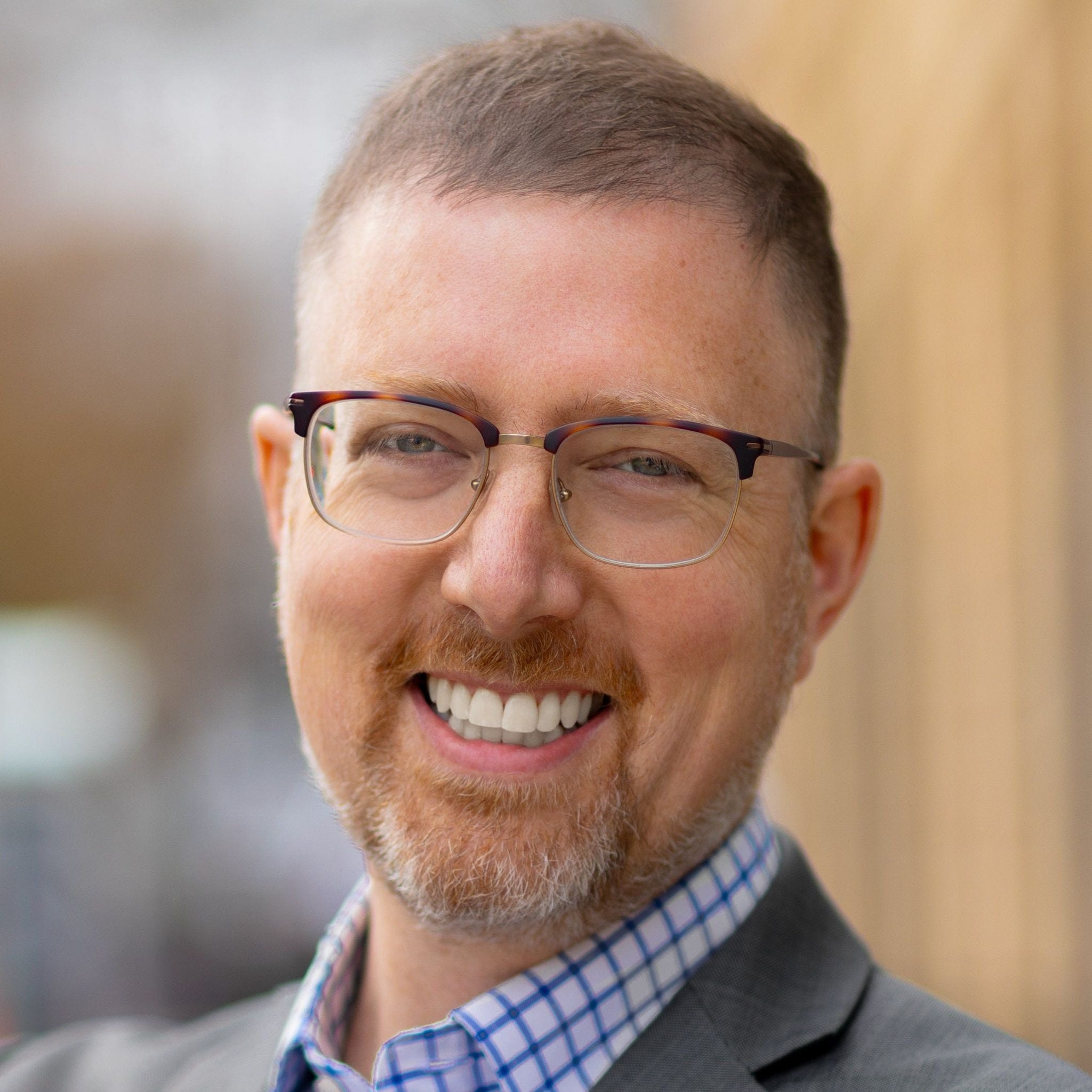
Q: You were Chair of the Wisconsin Democrats from 2019 to 2025, during which you were able to transform Wisconsin from a “democracy desert” to a full-fledged functioning democracy. With your book, you turn your attention to the U.S. as a whole with a new transformation plan. What are you hoping to convey to readers, and what need does your plan address?
Ben Wikler: So many Democrats—and people in general who are dismayed by the state of the U.S. political and economic system—have asked me, “What is the plan?”
My goal with this book is to lay out a realistic and, I hope, energizing answer for how we get out of this mess.
By “the plan,” I mean a plan that ladders up from what each individual can do this week, all the way through the specific policies that can unrig the system itself so that this country works for everyone. Step by step, year by year. Along the way, I map out how you can help win elections, which elections we have to win, and what policies elected officials at all levels will need to pass once they’re in power in order to build a future of American government by, of, and for the people.
The thesis of the book is that even in this moment of domination by the wealthiest people the world has ever known, regular citizens are not powerless. In fact, if they direct their power to the fights that are balanced on a knife’s edge but can affect the future of American democracy—often obscure elections for offices like state Supreme Court or state legislature—then there’s a gigantic opportunity to build a better future.
And for any of this to work, we have to have blast doing it. Which is why the book is shamelessly riddled with Princess Bride quotes. We have to “have fun storming the castle”—in a peaceful, civil, non-January-6th-y sort of way.
Q: You write you want to “end Trumpism and unrig America” the way you unrigged Wisconsin. What do you envision are some of the key milestones and benchmarks, and how realistic do you think they are to meet?
BW: The reason I know that it’s possible to unrig the national political system is that a movement of thousands of people, of which I was proud to be one, unrigged a GOP-dominated system of control in my home state. That required years of work focused on multiple parts of the government—in particular, electing a pro-democracy governor, preventing GOP supermajorities in the state legislature, and finally winning a pro-democracy majority on the state Supreme Court.
Looking at the national landscape, we’ve got a rigged system at multiple levels—including a corrupt, partisan, and rogue U.S. Supreme Court; gerrymandered US House districts; a president chosen through a preposterous system in the Electoral College; and a U.S. Senate in which, thanks to current rules around the filibuster, a minority of senators has a veto over laws supported by the majority—which is exactly the opposite of what the Founders intended.
The plan is to change all of that. First, alongside the fight for Congressional majorities in 2026, focus on winning state governments. Blue state-level trifectas can dictator-proof their states and also pass the National Popular Vote Interstate Compact, which would make the Electoral College a ceremonial body and award the presidency to whoever wins the national popular vote.
Then, in 2028, Democrats and independents have to win the White House and both chambers of Congress.
2029 is the pivotal year: the Senate has to change its rules, and then the governing trifecta has to pass a major U.S. Supreme Court reform—term limits are a leading idea; a national gerrymandering ban (and potentially proportional representation for the U.S. House), and welcome DC statehood and a referendum on statehood in Puerto Rico.
Do all that before 2030, and the usual midterm backlash won’t lead to nationwide gerrymandering that undercuts democracy through 2042. Both parties will have opportunities to pass laws that reflect their values, and the public will decide which it prefers. You know, like in a real democracy. Wild idea.

Q: In the book, you make an interesting point that while Freedom of Speech usually gets most of the First Amendment attention, it’s Freedom of Assembly that is core to making political change, through what you refer to as “relational organizing.” Can you say more about that, and explain how, no matter where folks live, we can all start to take action to make a difference in our communities?
BW: Abraham Lincoln put it best, in a letter to a Whig campaign committee in 1840: “Keep a CONSTANT WATCH on the DOUBTFUL VOTERS, and from time to time have them TALKED TO by those IN WHOM THEY HAVE THE MOST CONFIDENCE.”
Every one of us has that trusted person we text when we’re about to vote and haven’t taken the time to look up the candidates for some obscure local office. For some people, it’s the same when they’re thinking about who to support for Congress. If you can become that trusted person, you can help make sure that great candidates get the support they need to win. I map out in the book how the process of building relationships with voters who are on the fence—people who aren’t sure whether to vote, or whom to vote for—is at the heart of the superpower each of us holds in a democracy: organizing.
In Wisconsin, starting with my predecessor state party chair, we’ve been building a neighbor-to-neighbor organizing network that operates year-round to persuade and turn out voters in every single election. It has an enormous impact in our state. In This Is the Plan, I map out how you, wherever you might be, can build a team of people that engages in exactly this way, and the tactics that will make the biggest difference to election outcomes.
Q: You identify three pillars that make up what you call the essence of politics: “Listen, Build Trust, Persuade.” Can you elaborate on this? How is listening to voters essential if you want to persuade them to vote your way?
BW: The voters who decide close elections are the fence-sitters: people who are on the fence about whether to vote, or on the fence about who to vote for, or both. They’re a diverse bunch, but they generally have something in common, and it’s a big thing: they don’t put politics at the center of their lives. It’s not that they don’t care. They have values and beliefs just as strong as yours or mine. But very often they don’t much like politics, they don’t really trust politicians, they think the whole thing can feel like bullshit, and they’d rather spend time thinking about something else.
For many of these Americans, politics is like curling: an activity of which they’re vaguely aware when it’s on television for a few weeks every four years (say, during the Winter Olympics), but which has little to do with them and is not their consuming obsession. Ask such a voter about the “Broomgate” scandal that rocked the world of curling, and they’ll give you a blank stare. Trying to persuade fence-sitters to join your political side by reeling off ideas that sound like obscure political minutia can land the same way.
So if you want to persuade them, remember that they’re interested in different things from you. Don’t try to change their interests. Don’t lecture them about how they should pay more attention. Don’t yell at them to convince them they’re wrong. Instead, meet them where they are. Listen to them long enough to understand how they make sense of things, and find a value that you share, a basis for making common cause.
You can’t do any of that if you only show up every four years, which is exactly why the organizing has to be constant. Listen first. Earn the trust. Then, and only then, do you get to persuade.
Q: Are there any local elections or local political leaders we should be watching this year as examples of where your plan is already working?
BW: Yes! I’ll start in my own backyard: Wisconsin.
The core idea of the book is that every level of political power sets the rules for the other levels. So if you want to unrig American democracy, a great place to start is by winning power at the state level. Wisconsin demonstrates the power of this approach. My state was dubbed a “democracy desert,” with maps so gerrymandered that, in 2018, Democrats won every statewide office and 54 percent of the state assembly vote, and got 36 percent of the seats. Then we won a majority on the state supreme court, that court threw out the rigged maps, and control of the legislature is finally in play.
That brings me to two spectacular leaders who have played a pivotal role in those fights—and are now poised to play an even bigger role in our state’s history: Wisconsin Assembly Democratic Leader Greta Neubauer and Senate Democratic Leader Dianne Hesselbein.
When Republicans were on the verge of winning supermajority control of both chambers, Leader Neubauer and her team ran a spectacular operation that blocked the GOP’s ambitions by 2491 votes across two districts. Then, for two years, they ran an astonishingly complex operation to ensure that there would never be more than one Assembly Democrat outside the chamber—which ensured that the GOP couldn’t override Governor Evers’s veto, despite repeated attempts. And then, on new maps in 2024, she flipped ten Assembly seats. Five more to go for a majority. She’s a fighter and a kindred political spirit, and I can’t wait to see her wield the gavel.
Meanwhile, in Leader Hesselbein, the spirit of Fighting Bob lives on: supercharged electoral success—sweeping every purple state Senate seat in 2024, and putting her caucus within two seats of an outright majority in 2026; superb candidate recruitment; and a total focus on delivering results once she becomes Majority Leader. She holds her caucus together and, over and over, manages to split the GOP caucus in the Wisconsin legislature and block their worst plans.
They oversee the caucus campaign committees—the ones that identify the most flippable seats, the best targets on offense or on defense. They’ve mapped out the battle plan for this fall. They’re leaders to watch.
Q: For local activists who want to impact a local race in their area that could come down to just a few votes, what are your top three things they should do to maximize their odds of success?
If your local race might come down to a few votes, first, congratulations. You’ve been given a gift. You have a chance to play a decisive role in determining an election result. Now, your job is to figure out where your energy has the biggest impact.
1. Talk to the people you know. The very most powerful thing you can do as a volunteer in politics is to talk to your actual friends and family who are fence-sitters. In the world of political operatives, this is called relational organizing, and it’s as effective as campaign outreach gets. When you talk to friends, they listen. One experiment in Florida found that voters who received text messages from people they personally knew were 8.6 percentage points more likely to vote than those in the control group. So scroll through your phone, make a list of fifty people in key areas who’ve occasionally missed elections, and stay in touch with them. You’ll make the ghost of Abraham Lincoln smile.
2. Do Polling Place Vote Tripling. It’s got a very non-catchy name, PPVT, and try to pronounce it and it sounds like you’re practicing your embouchure before playing some polka on a tuba. But it’s wildly powerful. Once early voting starts, go outside a polling place in a neighborhood where any given voter is likely to be voting on your side, mind your local distance rules, and greet people as they leave after voting. Flash them your winningest smile, and ask them if they can text three of their friends, right then, and remind them to vote early. You’re talking to people who’ve just voted, so they’re proudly brandishing their “I Voted” sticker; you’re getting them to do on-the-spot relational organizing, so the people they text actually read the message; and you’ll talk to way more people than you would knocking on doors where nobody’s home.
3. Plug into a group that takes the science of voter contact seriously. Find a campaign or organization near you that practices relational organizing, and sign up. Make sure you’re not signing up for an Elon Musk front group, and you’re good to go. They’ll match the contacts on your phone against the voter file and hand you a list of exactly who to reach. There are, in fact, apps for that. Politics is a team sport; start or join a team that uses a Moneyball approach to getting the biggest result out of every hour or every dollar, and you’ll discover that being part of something effective is often a joy.
This Is the Plan isn’t a book about shortcuts. Unrigging the American political system is a long fight that will take years. To sustain political energy across such an epic journey, you need to make friends along the way. But the great thing about politics is that, in fact, you’ll meet people you love when you’re working in service of something larger than yourself. I fell in love with my wife while we were putting up posters for a protest. You can’t help but make lifelong friends when you’re in the political trenches together. In the process of organizing your way to a better democracy, you just might help solve America’s loneliness crisis at the same time.
 | A guest post by
|
Love this. The beating heart of democracy is apparently people talking to each other. Not consultants, poll-tested slogans, or cynicism. Just people. Talking.
This piece is very encouraging, we all can do at least one or two of the things he’s suggested. The main issue I see in comments on Substacks is that people feel powerless. All of us have friends and or family that may help us get to the end we desire. It makes sense to me, positive interactions are the way to get people involved.